
—Psychology, human difference, and the controversial history of intelligence science.—
Intelligence has been understood in very different ways by different cultures over the course of human history. Our modern understanding of intelligence only really began to emerge during the Enlightenment. A period which celebrated human reason and its power to overcome superstition and fanaticism naturally prompted interest in what such reason consisted of, who possessed it, and what role it should play in the organisation of society. This interest was also driven by ideas about human difference and inequality. Economic and social change, colonial expansion, and the emergence of evolutionary theory encouraged the view that differences in mental ability explained the inequalities between white Europeans and other races, between rich and poor, and between men and women.
By the 19th century, the way intelligence was understood had begun to look familiar to the ways we understand it today. The term itself was increasingly being used to refer to high mental ability, rather than the various other meanings it had carried in past. It was becoming more closely associated with reason and rationality, losing its link to ideas about virtue and character, as well as its entanglement with notions of religion and the divine. And it was understood as something that certain individuals and groups possessed more than others. At around the same time, the first modern psychologists began to study mental abilities and found, in these new ideas about intelligence, a conceptual toolkit and a convenient label to build their work around. They set about turning intelligence into a science.
One of the first people to try to scientifically study human intelligence was Francis Galton, the scientific polymath and father of eugenics. Galton was particularly interested in the scientific measurement of people, and their mental and physical abilities. His major contribution to the scientific study of intelligence came in 1869 with the publication of his book, Hereditary Genius. The book promised to uncover the secrets of genius through statistical analysis of 1000 eminent British men from 300 families, including the leading statemen, military commanders, judges, writers and scientists of recent history. According to Galton, his study proved decisively that the mental abilities on which the eminence of these men rested was inherited; that they were a product of nature rather than nurture.
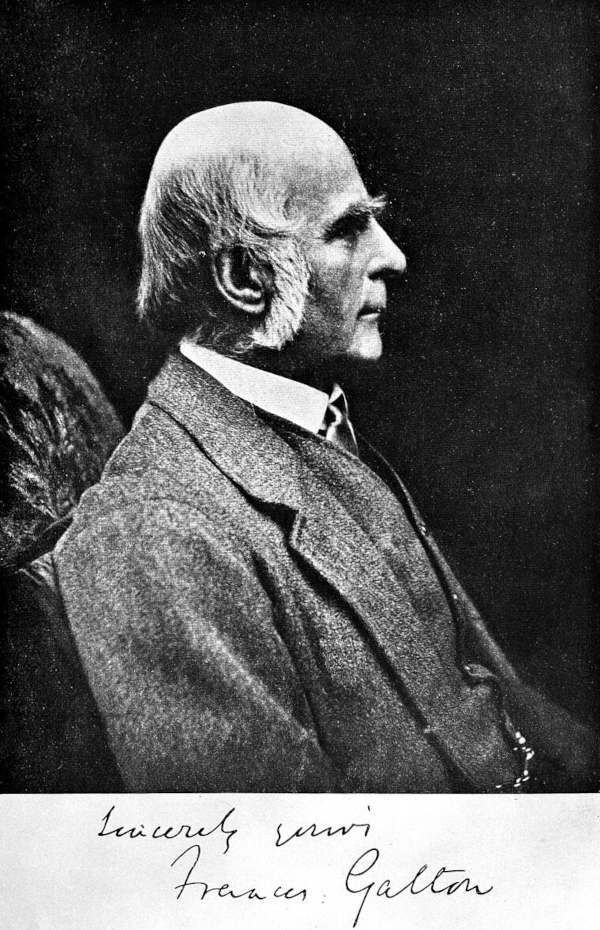
Francis Galton. Wellcome Collection.
The French psychologist, Alfred Binet, took this process further by introducing the technologies of intelligence testing. As France sought to introduce universal elementary education, its government called for new ways to identify “abnormal” children who needed to be separated into special schools or classes. In response, Binet and his collaborator, Théodore Simon, developed a new test in 1905 entitled New methods for the diagnosis of the intellectual level of the abnormal. One of the most influential innovations Binet and Simon introduced was the idea that there were age-specific mental level against which individual children could be measured.
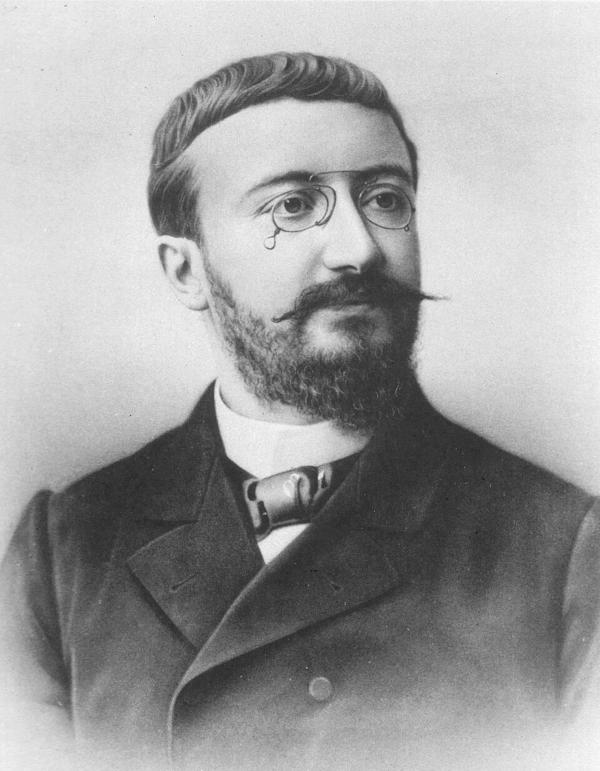
Alfred Binet. Wikimedia.
Binet’s tests turbocharged research on intelligence and testing among psychologists in Europe and the United States. Where Binet had been content to average out the scores from different tests to identify vaguely-defined “mental levels”, the British psychologist Charles Spearman argued in 1904 that underlying all of these different measures of intelligence was a real existing thing called “general intelligence”, or g. In California, another psychologist named Lewis Terman translated and revised Binet’s tests, publishing the Stanford Revision of the Binet-Simon Scale in 1916. Inspired by a proposal from the German psychologist Willian Stern a few years earlier, Terman replaced Binet’s language of mental levels with the new concept of “intelligence quotient”, or IQ – calculated as the ratio of mental age (as determined by the tests) to chronological age, times one hundred. For the first time in history, it was now possible to give someone a test which would produce a single number offering a definitive assessment of their intelligence.
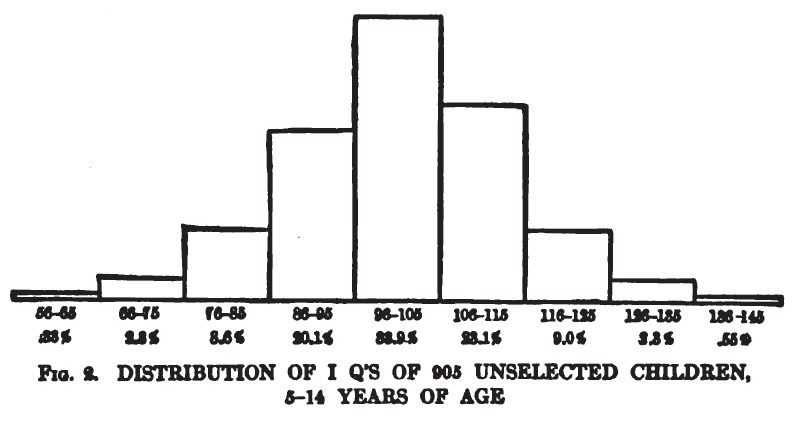
Score distribution chart from sample of 905 children tested on the 1916 Stanford-Binet test. Source: Lewis Terman, The Measurement of Intelligence (1916). Wikimedia.
Terman’s tests proved wildly popular. Just a year after their publication, the United States entered the First World War. Terman was appointed to a panel of psychologists designing a new set of intelligence tests to be given to new army recruits. Nearly two million American servicemen sat these tests before the end of the war, with results helping to dictate who would be sent for officer training.
The Army tests and their results received huge media attention, not least because they were interpreted as showing that immigration was undermining the intelligence levels of US society. They seemed to offer an official endorsement for the new, and until then largely untested, technology of intelligence testing. At the end of the war there was a huge demand for these tests from teachers and school administrators. Pirated copies of Terman’s test quickly sprang up across the country. By 1925 his tests were selling one and a half million copies a year. Terman was inundated with requests to approve translations and revision from countries across the globe, including Peru, Mexico, Poland, China and India. The intelligence testing industry had been born, and was quickly becoming a global phenomenon. Intelligence testing had come to be seen as a tool that could be used to engineer society.
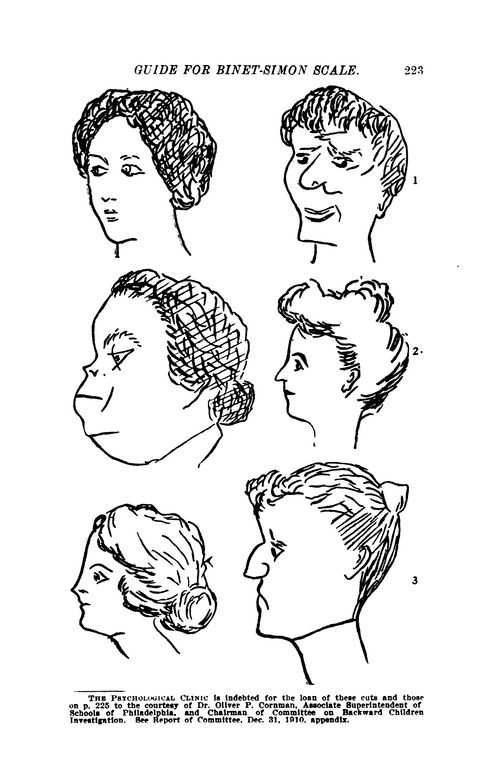
Which of these two faces is prettier? A question from the 1908 Binet-Simon test. Source: J. E. Wallace Wallin, ‘A Practical Guide for Administering the Binet-Simon Scale for Measuring Intelligence’, The Psychological Clinic, 5:1 (1911). Wikimedia.
These tests quickly became entangled in controversies over intelligence and race. Terman and other intelligence scientists were interested, not just in intelligence differences between individuals, but in differences between racial groups. They showed little interest in criticisms about their sampling methods or the obvious cultural loading of the questions in their tests. When Terman was collecting children with IQ scores of over 140 for his gifted children study, he noted that children with English, Scottish and Jewish parentage were overrepresented, and that there were low proportions of Mexicans, Italians and Blacks, offering this as proof of different native levels of intelligence between different races. Like so many of those involved in the birth of intelligence science, he was also an enthusiastic eugenicist and active participant in the work of the Eugenics Society.
These arguments about race and intelligence were entangled with the question of genetics and heritability. Since the start of the 20th century, intelligence scientists have debated what proportion of the variation in IQ levels is attributable to hereditary or environmental factors. In the early 20th century, the consensus was that intelligence differences were largely inherited. This changed in the middle of the 20th century, particularly in the 1960s and 1970s, which witnessed a turn towards environmentalist explanations. In the 1980s, James Flynn argued that average IQ scores had increased significantly in most societies over the course of the 20th century. The “Flynn effect”, as it is often called, was interpreted by many as evidence that intelligence levels are shaped by things like education, work, nutrition and public health.
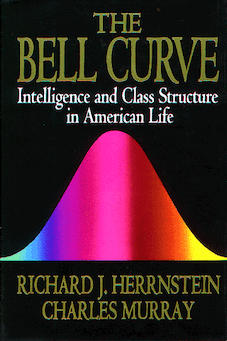
The Bell Curve. Wikimedia.
Despite this, the period from the 1970s to the 1990s witnessed a series of public controversies over the nature of intelligence and its heritability, controversies which revolved around the issue of race. Between 1969 and 1972, three high-profile psychologists – Arthur Jensen at Berkeley, Hans Eysenck at the Institute of Psychiatry in London, and Richard Herrnstein in Harvard – all published works arguing that differences in intelligence, including measured differences between people from different racial groups, were substantially inherited. These arguments met a huge amount of resistance, particularly from student groups, and became a central part of the campus culture wars of the era. Two decades later, these controversies were revived by Herrnstein in The Bell Curve. Co-written by the conservative political scientist Charles Murray, the book argued that average intelligence levels in the US were declining, that genetic factors played a key role in intelligence differences, and the social inequality between racial groups were partly rooted in unequal intelligence levels.
The controversies surrounding these arguments prompted the search for new ways to study and understand human intelligence. In 1983, for example, the educational psychologist Harold Gardner developed the idea of “multiple intelligences”, arguing that there were in fact seven distinct human intelligences. Since then, psychologists and social scientists have turned their attention to ideas about emotional intelligence, social or collective intelligence, and other ways of understanding human abilities. These ideas, and the association of IQ with race science, helped to undermine the popular cultures of IQ and intelligence testing which were so pervasive in the mid-20th century. Intelligence testing was even banned in a number of places because of concerns over its racial and other biases.
In recent years, however, there has been a scientific and popular turn back towards emphasising the role of genetics in explaining human differences, including differences in intelligence. This was influenced by the rise of neuroscience from the 1990s, driven by new scientific studies of the brain which inspired popular and political enthusiasm for brain-led explanations of psychological and social phenomena. It also reflected a renewed enthusiasm for genetics, inspired by the success of the Human Genome Project in 2003 and the various technologies to map and manipulate human genes which followed in its wake. Alongside these scientific developments, intelligence science and the language of IQ have remained popular among parts of the transatlantic right, which use them to justify arguments about social hierarchy and economic inequality.
Today, the technologies of intelligence testing continue to be used, often uncritically, in fields such as genetics, health research, neuroscience and even AI. Beyond the laboratory, the ideas that emerged from 20th century intelligence science continue to shape the way we understand human intelligence both as a force for progress and an explanation of inequality.
David Brydan
King’s College London
How to cite this paper:
Brydan, David. Human Intelligence. Sabers en acció, 2025-12-17. https://sabersenaccio.iec.cat/en/human-intelligence/.
Find out more
You can find further information with the bibliography and available resources.
Recommended reading
John Carson, The Measure of Merit: Talents, Intelligence, and Inequality in the French and American Republics, 1750-1940 (Princeton, NJ.: Princeton University Press, 2007).
Elaine E. Castles, Inventing Intelligence: How America Came to Worship IQ (Santa Barbara, CA: Praeger, 2012).
James Flynn, What is Intelligence? Beyond the Flynn Effect (Cambridge: Cambridge University Press, 2007).
Studies
Michael Collins, ‘W.E.B Du Bois’s Neurological Modernity: I.Q., Afropessimism, Genre’, in The Triangle Collective (eds.), The Palgrave Handbook of Twentieth and Twenty-First Century Literature and Science (Palgrave Macmillan, 2020), 559-576.
Paul Davis Chapman, Schools as Sorters: Lewis M. Terman, Applied Psychology, and the Intelligence Testing Movement, 1890-1930 (New York: New York University Press, 1988).
Saul Dubow, ‘Mental Testing and the Understanding of Race in Twentieth-Century South Africa’, in Teresa Meade and Mark Walker (eds.), Science, Medicine and Cultural Imperialism (London: Macmillan, 1991), 148-177.
Erik Linstrum, Ruling Minds: Psychology in the British Empire (Cambridge, Mass.: Harvard University Press, 2016.
Niclas Lemann, The Big Test: The Secret History of American Meritocracy (New York: Farrar, Straus and Giroux, 1999).
Génesis Núñez-Araya and Annette Mülberger, ‘Buscando el «Tesoro» de la nación: el niño superdotado en España, 1911-1936’, Dynamis, 40: 2 (2020). 299-24.
Quinn Slobodian, ‘The Unequal Mind: How Charles Murray and Neoliberal Think Tanks Revived IQ’, Capitalism, 4:1 (2023), 73-108.
Michael E. Staub, The Mismeasure of Minds: Debating Race and Intelligence between Brown and The Bell Curve (Chapel Hill: University of North Caroline Press, 2018).
John White, Intelligence, Destiny, Education: The Ideological Roots of Intelligence Testing (Abingdon: Routledge, 2006).
Sources
N.J. Block and Gerald Dworkin (eds.), The IQ Controversy: Critical Readings (New York: Pantheon Books, 1976).
Francis Galton, Hereditary Genius: An Inquiry into its Laws and Consequences (London: Macmillan and Co, 1869).
R.J. Herrnstein, I.Q. in the Meritocracy (London: Allen Lane, 1973).
Richard J. Herrnstein and Charles Murray, The Bell Curve: Intelligence and Class Structure in American Life (New York: The Free Press, 1994).
Charles Spearman, ‘“General Intelligence,” Objectively Determined and Measured’, The American Journal of Psychology, 15:2 (1904), 201-92.
Websites and other sources
‘Intelligence testing, race and eugenics, Wellcome Collection, https://wellcomecollection.org/stories/intelligence-testing–race-and-eugenics
‘Searching for genius’, Wellcome Collection, https://wellcomecollection.org/series/searching-for-genius
‘In Our Time: Intelligence’, BBC, https://www.bbc.co.uk/sounds/play/p00545l3

